Screen Time and Children's Vision — What Parents Should Know
On this page
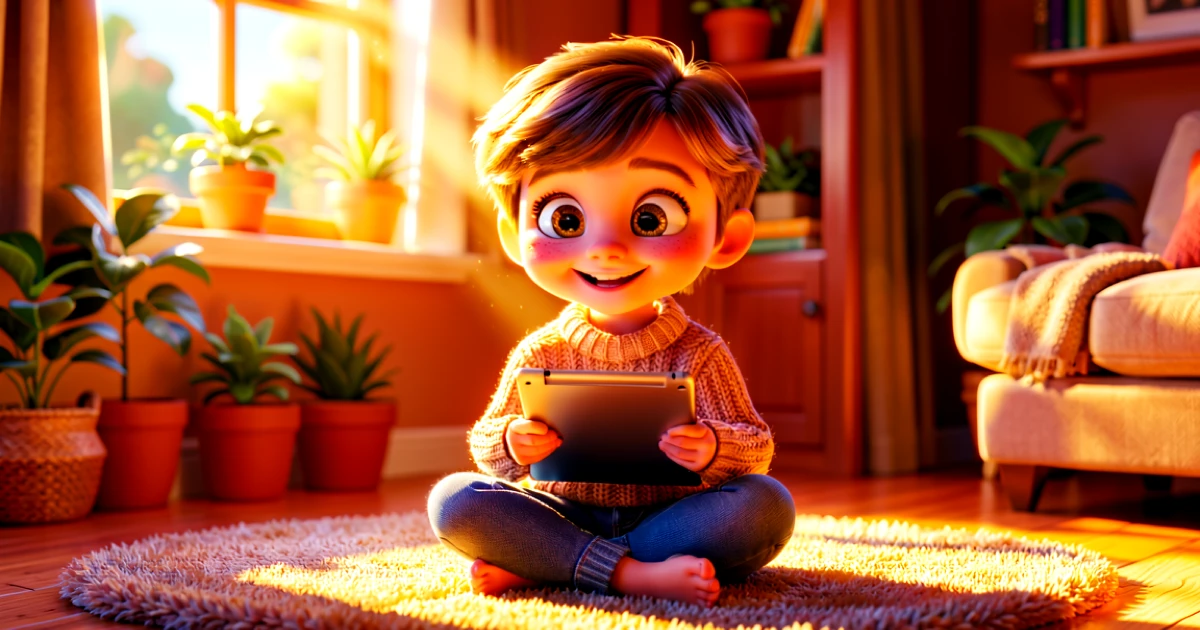
A four-year-old who can unlock an iPad faster than most adults can tie a shoe. It sounds impressive until the question lands: what is all that screen time doing to those still-developing eyes?
Most parents carry that quiet worry. Schools hand out laptops, homework lives on screens, and downtime defaults to YouTube. The screens themselves aren't the villain -- but the unbroken hours in front of them might be.
The problem isn't that kids use screens. The problem is that they forget to stop.
What Screens Do to Developing Eyes
Digital Eye Strain
When a child locks onto a screen, blink rate drops significantly. The eye muscles work overtime to hold focus at a fixed near distance. The result is what optometrists call digital eye strain -- dry eyes, blurry vision, headaches, and neck tension.
Adults notice the discomfort. Children often don't, because whatever is on the screen is more interesting than the slight burn behind their eyes.
The Myopia Connection
Research continues to show a link between heavy screen use and rising rates of myopia (nearsightedness) in children. The working theory: sustained close-up focus can change the shape of a developing eyeball over time.
- Genetics: Family history of myopia raises baseline risk.
- Near work: Prolonged reading, drawing, or screen use at close range adds to the load.
- Outdoor time deficit: Less time outdoors correlates with higher myopia rates in nearly every study.
Myopia rates in children have been climbing for years. Screen time is one of the prime suspects -- not the only factor, but a significant one.
Sleep Disruption
Blue light from screens suppresses melatonin, the hormone that signals the body to wind down. A child on a tablet right before bed ends up wired instead of tired. Poor sleep then cascades into mood, focus, and eye health the following day.
Practical Steps That Actually Help
The 20-20-20 Rule (and the +20 Extension)
Every 20 minutes, look at something 20 feet away for 20 seconds. Simple concept, hard to remember -- especially for a child deep in a game. Tools like Limited Session can automate the reminder so no one has to play timekeeper.
Some families take it a step further with a 20-20-20-20 variation -- adding 20 steps to the routine. When the break reminder fires, the child looks away from the screen, then gets up and walks 20 steps before sitting back down. It takes under a minute and adds just enough movement to reset posture, get blood flowing, and break the locked-in screen trance. For kids who tend to stay glued to the chair for hours, those 20 steps can be the difference between a stiff, cranky evening and a normal one.
Regular breaks aren't punishment. They're the equivalent of a water break in sport.
Screen Setup
Small adjustments add up:
- Brightness: Match screen brightness to the ambient light in the room -- no blazing rectangle in a dark cave.
- Distance: Arm's length from the screen, positioned slightly below eye level.
- Text size: Bump it up. Squinting at small text accelerates strain.
- Ambient light: A well-lit room reduces the contrast between screen and surroundings.
Outdoor Time
This is the single most effective intervention. Multiple studies show that two or more hours of outdoor time per day significantly reduces the risk of developing myopia. Something about natural light and focusing on distant objects gives developing eyes exactly what they need.
Regular Eye Exams
Children rarely report blurry vision because they don't know what "normal" looks like. A routine exam with an optometrist catches problems early -- when they're most treatable and least disruptive.
Finding the Balance
No family gets screen time perfectly right. Some days the tablet is the only thing keeping the peace. That's fine.
What matters is the pattern over weeks and months: breaks happening, outdoor time built into the routine, and an eye exam on the calendar. A child's vision is still developing, and the habits that form now tend to stick.
The goal isn't zero screen time. It's screen time that doesn't come at the expense of healthy eyes.
Related Articles
Computer Vision Syndrome — The Early Signs Every Desk Worker Misses
The first symptoms of CVS rarely look like eye problems. The headache, the brain fog, the urge to scroll your phone after work — those are early signs, not separate issues.
How Break Reminders Help Parents Manage Kids' Screen Time
A practical guide for parents who want their kids to take regular screen breaks without constant nagging.
Blue Light and Eye Health — Separating Fact From Marketing
What blue light actually does to the eyes, what it doesn't, and which habits matter most.
The 20-20-20 Rule Explained — And Why Most People Do It Wrong
What the 20-20-20 rule actually requires, where most people cut corners, and why the timing matters more than it sounds.