What Eye Exams Catch, and How Often to Book One
On this page
For most people, eye exams sit in the same neglected corner of the calendar as dentist visits and attic-clearing — something for a quieter month that never quite arrives. Vision still seems fine, reading signs still works, screens are still legible; the appointment slips another year.
The trouble is that most eye diseases do not advertise themselves. A routine exam can catch early glaucoma, diabetic retinopathy, macular degeneration, and even systemic conditions like hypertension and diabetes long before any symptom prompts a doctor visit. The optometrist's office is one of the few places in healthcare where an invisible problem can still be headed off, which is precisely what makes the habit worth keeping.
Most eye diseases do not hurt. By the time they announce themselves, something has quietly been lost.
What a Comprehensive Exam Covers
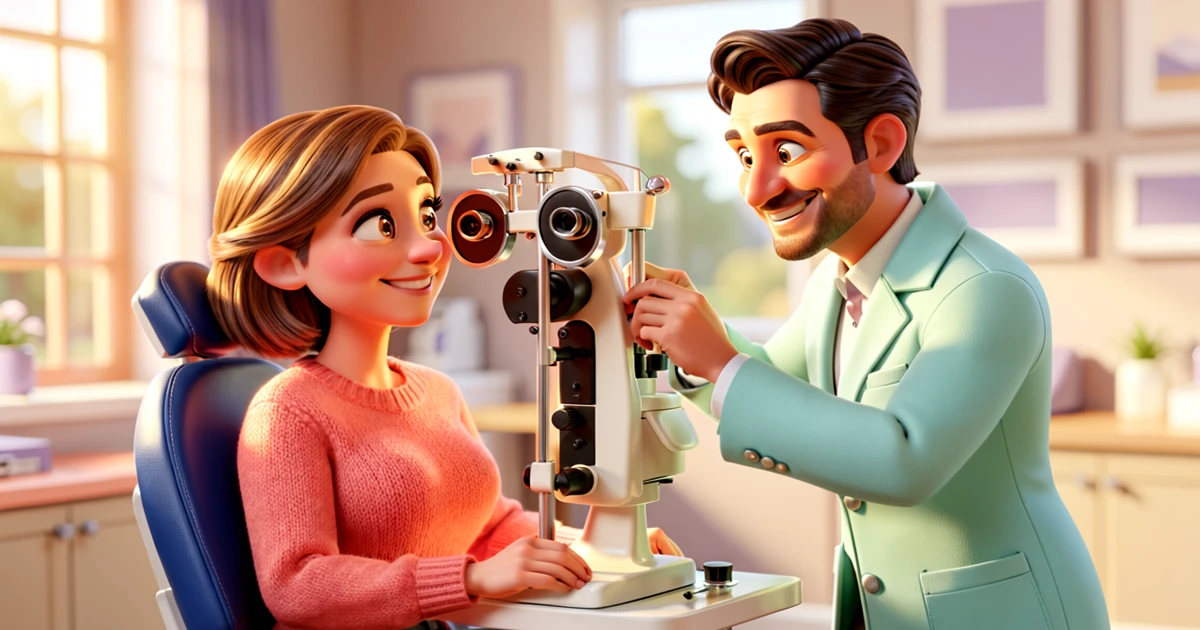
A full exam runs about 30 to 45 minutes and moves through a sequence of tests, each aimed at a different structure of the eye:
- Visual acuity: The familiar letter chart. Measures how sharply the eyes resolve detail at different distances.
- Refraction: The "better one, or better two?" lens flip that dials in an exact prescription, if one is needed.
- Peripheral vision: A check of how well the eyes see off to the sides. Gradual peripheral loss is an early glaucoma sign and often goes unnoticed because it creeps in slowly.
- Slit-lamp exam: A microscope inspection of the cornea, iris, and lens, looking for abnormalities that are invisible to the naked eye.
- Tonometry: The quick puff of air — or a gentler hand-held probe in newer equipment — measures pressure inside the eye. Elevated pressure is a major glaucoma risk factor.
- Retinal exam: Pupils are dilated so the optometrist can see the retina, the optic nerve, and the blood vessels at the back of the eye. This is where diabetic retinopathy, age-related macular degeneration, and signs of systemic illness tend to show up first.
That last test carries a detail worth repeating: the retina is the only place in the body where a clinician can see blood vessels directly, without imaging or surgery. An eye exam occasionally catches diabetes or hypertension before a family physician does.
Cadence by Age and Risk
A rough cadence, with the understanding that a specific doctor's recommendation always wins:
- Children: First exam between 6 and 12 months, another at age 3, one before starting school, then every one or two years after that.
- Adults 18 to 39 with no known issues: Every two years is fine for most. Yearly for contact-lens wearers or anyone with known risk factors.
- Adults 40 to 64: Every one or two years. Presbyopia and early glaucoma risk start showing up in this range.
- Adults 65 and older: Yearly, without exception. The risk of serious eye disease climbs noticeably in this decade.
Higher-Stakes Groups
A few groups benefit from tighter cadence regardless of age:
- Children: They rarely report vision trouble because they assume everyone sees what they see. Undiagnosed problems can get mistaken for learning or behavioural issues.
- Anyone with diabetes: Diabetic retinopathy is one of the leading causes of preventable blindness, and early-stage disease is treatable.
- Anyone with a family history: Glaucoma and AMD cluster in families. A relative's diagnosis raises the stakes for everyone downstream.
- Contact-lens wearers: Lenses sit directly on the cornea and modestly increase infection risk. A yearly exam keeps the fit and corneal health in check.
When to Skip the Queue
A few symptoms warrant a same-day appointment instead of waiting for the next scheduled visit:
- A sudden flash of light with no external source
- A shower of new floaters appearing at once
- A curtain-like shadow encroaching on vision
- Sudden, unexplained vision loss in one or both eyes
Each of these can indicate a retinal detachment or similar urgent condition. Waiting them out is how eyes are lost.
What Skipping Them Costs
The uncomfortable fact about most eye disease is that it is silent. Glaucoma erodes peripheral vision slowly enough that forty percent can be gone before the brain notices. Macular degeneration takes central vision in pieces small enough to be rationalised away. Diabetic retinopathy can progress for years without a single symptom.
Once that damage arrives, it tends to stay. Vision lost to glaucoma is not recoverable; the treatment goal shifts from restoration to preservation, and preservation only works when the disease has been caught early. Beyond the dramatic outcomes, the quieter cost of uncorrected vision — nagging headaches, screen fatigue, tired night driving — erodes daily life slowly enough that most people only notice how much better things can feel once a current prescription is finally in place.
The optometrist is not just checking vision. They are looking at the only set of blood vessels in the body a clinician can inspect without a scalpel.
Day-to-Day Eye Care
Exams set the baseline. A few small habits hold it steady between visits:
- Leafy greens and oily fish: Lutein, zeaxanthin, and omega-3 fatty acids all appear on most ocular-health recommendation lists.
- UV-blocking sunglasses: UV damage is cumulative. Protection pays off decades later, not immediately.
- Screen breaks: The 20-20-20 rule — every twenty minutes, look at something twenty feet away for twenty seconds — is the standard reminder. Anyone who loses track of the hour mid-deep-work can lean on a reminder app such as Limited Session to keep the habit running.
- Quitting smoking: Smoking raises the risk of cataracts, AMD, and optic-nerve damage — one more entry on an already long list of reasons.
- Knowing family history: A few minutes asking relatives about their eye history can change both the cadence and the focus of every future exam.
Eye exams feel skippable precisely because they rarely produce drama, and that is also exactly why they matter. A yearly appointment — or every two years, for the lower-risk groups — is the cheapest form of future-sight insurance on the market. Eyes that carry the rest of life through every day deserve the hour back.
Related Articles
Blue Light and Eye Health — Separating Fact From Marketing
What blue light actually does to the eyes, what it doesn't, and which habits matter most.
Essential Tips for Digital Eye Strain
Why long screen days leave eyes aching by evening, and the small, durable habits that keep the strain from becoming chronic.
Understanding Dry Eye Syndrome Key Insights
Understanding Dry Eye Syndrome key insights.
Computer Vision Syndrome — The Early Signs Every Desk Worker Misses
The first symptoms of CVS rarely look like eye problems. The headache, the brain fog, the urge to scroll your phone after work — those are early signs, not separate issues.